By The Sentinel Team Last Updated: January 2026
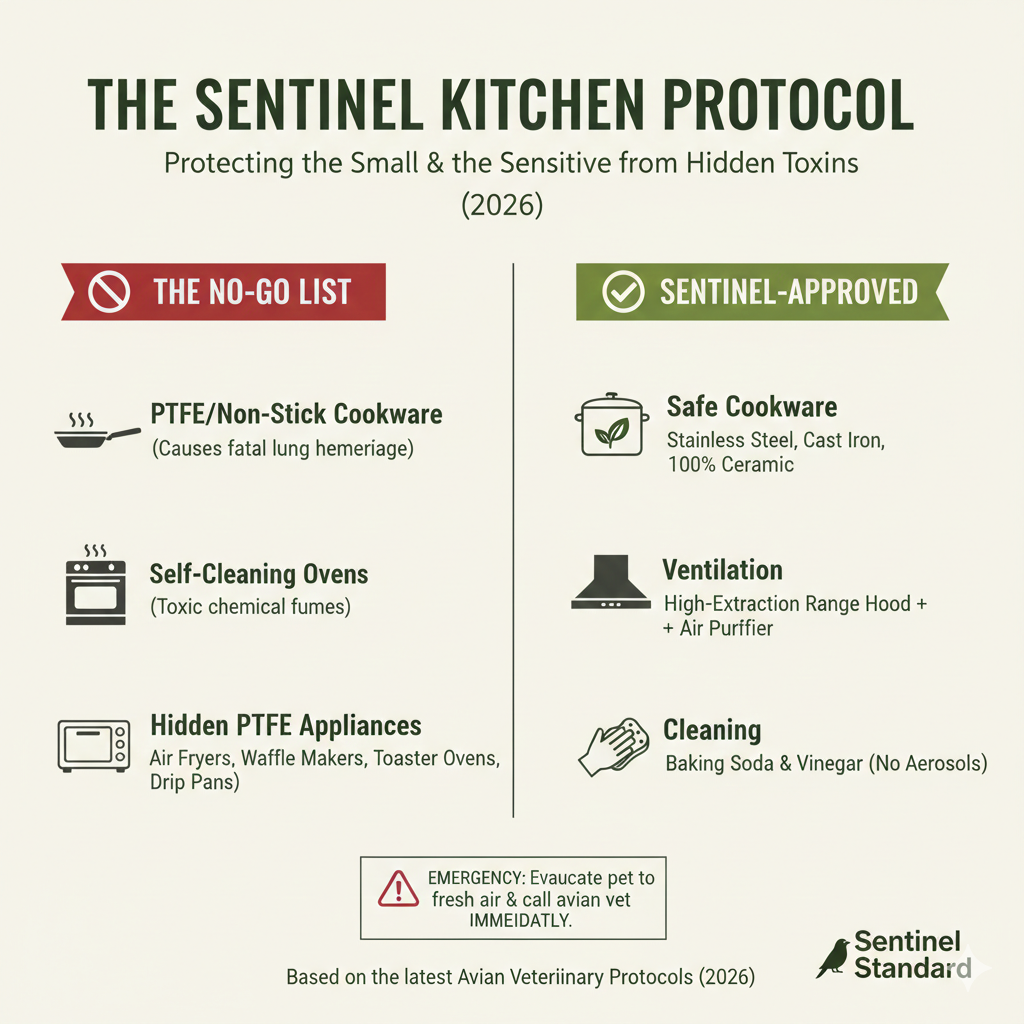
In the avian community, “Teflon Poisoning” is the leading cause of sudden, avoidable death. While we focus heavily on air purifiers in the living room, the greatest threat to a bird’s life often sits on the kitchen stove. For the “Small and the Sensitive,” the kitchen is a source of high-concentration thermal toxins that no air purifier can fully neutralize once they are airborne.
🔬 The Science: Why “Non-Stick” is a Biohazard
To understand the danger, we must look at the Anatomy of Vulnerability. Birds possess a flow-through respiratory system that is significantly more efficient than our own. When PTFE (Polytetrafluoroethylene) is heated, it undergoes “pyrolysis” and releases microscopic particles and acid gases.
- The Exposure: These gases reach the bird’s air sacs almost instantly.
- The Reaction: The lungs suffer from acute pulmonary hemorrhage. The capillaries burst, and the bird essentially suffocates on its own fluids.
- The Window: From the first puff of smoke to a fatal event can be less than three minutes.
The Unique Physiology of Avian Air Sacs
Unlike mammals, who use a “tidal” breathing system (air goes in and out the same way), birds have a complex network of nine air sacs that act like bellows.
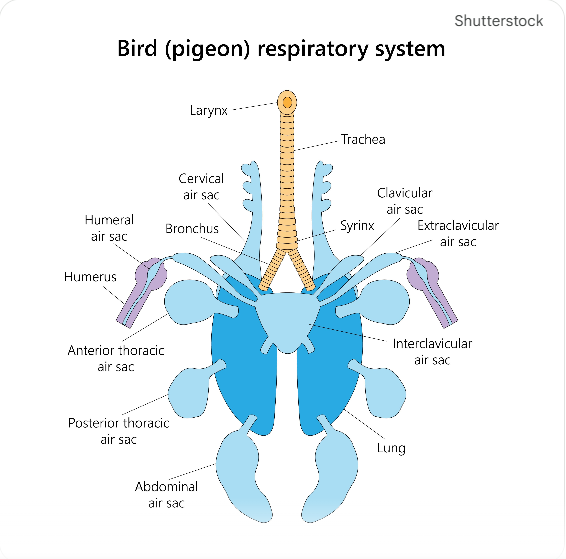
This system allows for a “continuous flow” of oxygen, meaning their lungs receive fresh air during both inhalation and exhalation. While this is an engineering marvel for flight, it is a fatal flaw in a toxic kitchen. Because they process air so much more efficiently, they also “inhale” toxins like PTFE and carbon monoxide at double the concentration of a human or a dog in the same room. By the time a human smells burning, a bird’s air sacs have already distributed the toxins throughout its entire body.
🚫 The “Hidden PTFE” Audit
Most owners know about frying pans, but PTFE is used in dozens of household appliances because of its heat-resistant properties. You must audit the following:
1. The Countertop Killers
- Air Fryers: Many baskets are coated in non-stick resin. In 2026, always look for “Stainless Steel” or “Glass” interior models.
- Toaster Ovens: The internal drip trays and wire racks are often coated.
- Waffle Makers & Griddles: Almost universally PTFE-based.
- Coffee Makers: Some heating elements in cheaper machines are treated to prevent scale buildup.
2. The Oven Trap (Self-Cleaning Mode)
The “Self-Clean” function on a modern oven is a death sentence. This feature works by heating the oven to over 480°C (900°F) to incinerate food residue. This temperature far exceeds the breakdown point of the oven’s internal gaskets and insulation, releasing a cocktail of carbon monoxide and formaldehyde.
3. Kitchen Hardware
- Drip Pans: The silver or black bowls under your stove burners.
- Ironing Board Covers: Some “scorch-resistant” covers are treated with non-stick chemicals that off-gas when hit with a hot steam iron.
✅ The Sentinel Transition: Safe Alternatives
You do not have to stop cooking; you simply have to change your “Sentinel Gear.”
| Material | Safety Rating | Sentinel Notes |
| Stainless Steel | ⭐⭐⭐⭐⭐ | The gold standard. Durable and 100% toxin-free. |
| Cast Iron | ⭐⭐⭐⭐⭐ | Naturally non-stick once seasoned with bird-safe oils (like Grapeseed). |
| 100% Ceramic | ⭐⭐⭐⭐ | Ensure it is “Solid Ceramic,” not just a “Ceramic Coating” over PTFE. |
| Copper (Unlined) | ⭐⭐⭐ | Safe, but requires high maintenance to prevent tarnishing. |
🛠️ The Emergency Protocol: If Exposure Occurs
If you see your bird gasping, tail-bobbing, or falling from a perch while you are cooking:
- Immediate Evacuation: Move the bird to fresh outdoor air immediately.
- Ventilation: Open every window and turn on your Hardware Registry sentinel approved purifiers on “Max.”
- Oxygen Therapy: Call an avian vet instantly. They will need to be placed in an oxygen tent; there is no “home remedy” for PTFE poisoning.